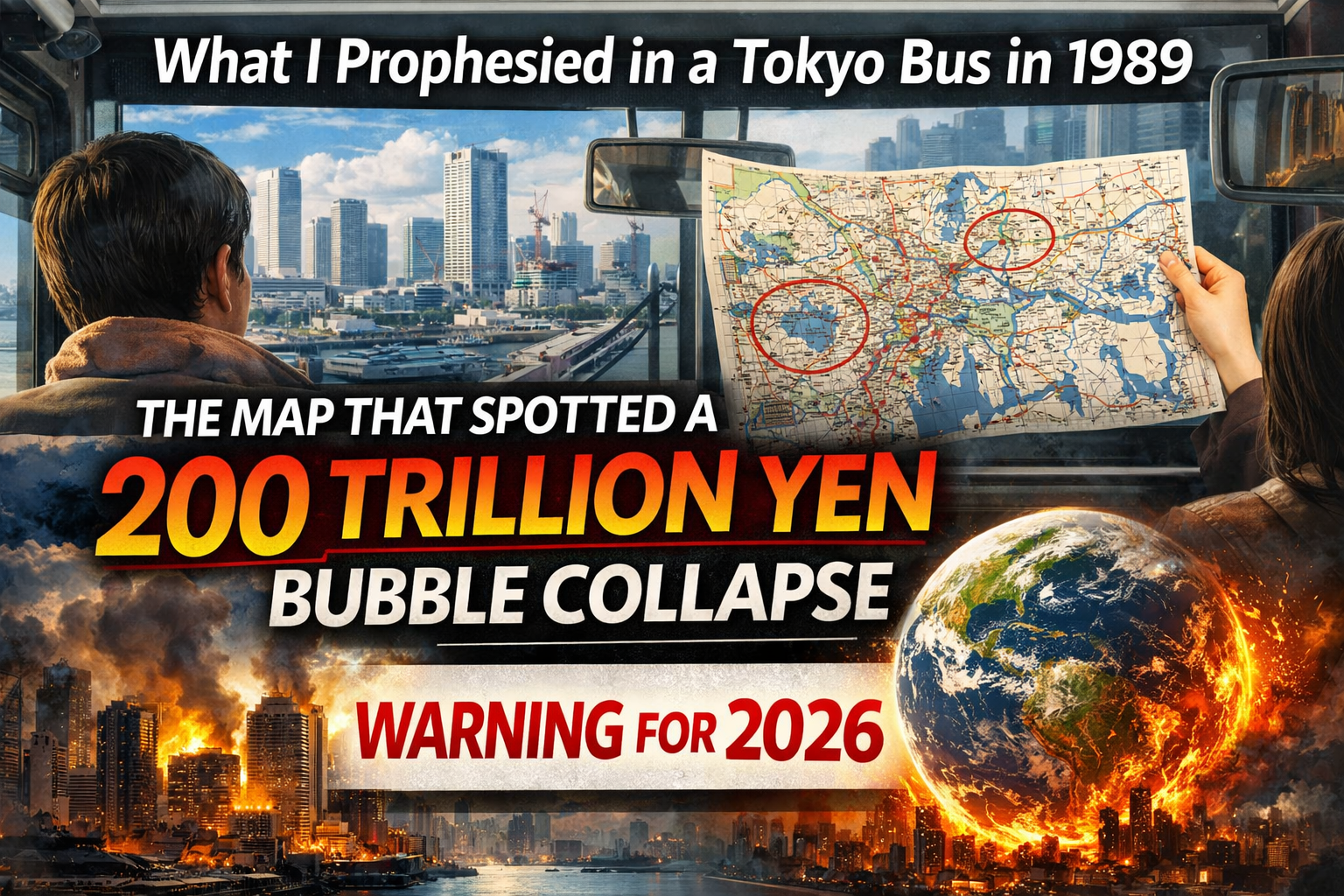
Beyond the ¥200 Trillion Collapse: Lessons from a 1989 Bus Tour to Toyosu
The Scene: 1989, Tokyo. The city was electric, fueled by the euphoria of the “Japan as Number One” era. I found myself at the helm of a private coach, hosting a select group of the world’s most elite fund managers. Our destination? Toyosu.
At the time, Toyosu was a desolate landscape of industrial docks and vacant factories—a far cry from the glittering skyline it boasts today. While the masses were fixated on the soaring prices of central Tokyo, I had been deep in the archives of the Securities Hall, meticulously cross-referencing corporate financial statements with intricate urban planning maps.
By calculating the “intrinsic value” based on floor-area ratios and projected yields, I presented a vision of Toyosu’s future that left these global titans in awe. I still remember the look of sheer astonishment on their faces as I articulated this strategy in English.
The Prelude to a ¥200 Trillion Crisis Yet, beneath the glamour of that tour, I heard the faint, chilling echo of a coming collapse. Behind the scenes, the global elite were orchestrating a “Containment of Japan.” Through the Plaza Accord’s currency shifts, the tightening of BIS capital requirements, and the introduction of punitive land taxes, the noose was tightening around the Japanese miracle.
In collaboration with my Director of Research at Nikko Securities, we authored a definitive report warning of the impending catastrophe. We saw the ¥200 trillion debt bubble for what it was—a house of cards about to meet its reset. What followed was three decades of deflation, where the nation’s crown jewels—land, buildings, and corporate assets—were liquidated and snatched up by foreign capital.
2026: The Cycle Returns History does not repeat, but it often rhymes. Today, as capital flees other regions and returns to Japan, the surging stock and property prices evoke a haunting sense of déjà vu.
While the market remains resilient for now, a true strategist never waits for the storm to break. To navigate this era, one must master the “Four Wallets Strategy”—a sophisticated equilibrium of real estate, global securities, and currency diversification between the Dollar and the Yen.
Success is not merely about wealth; it is about the wisdom to preserve it.

コメント