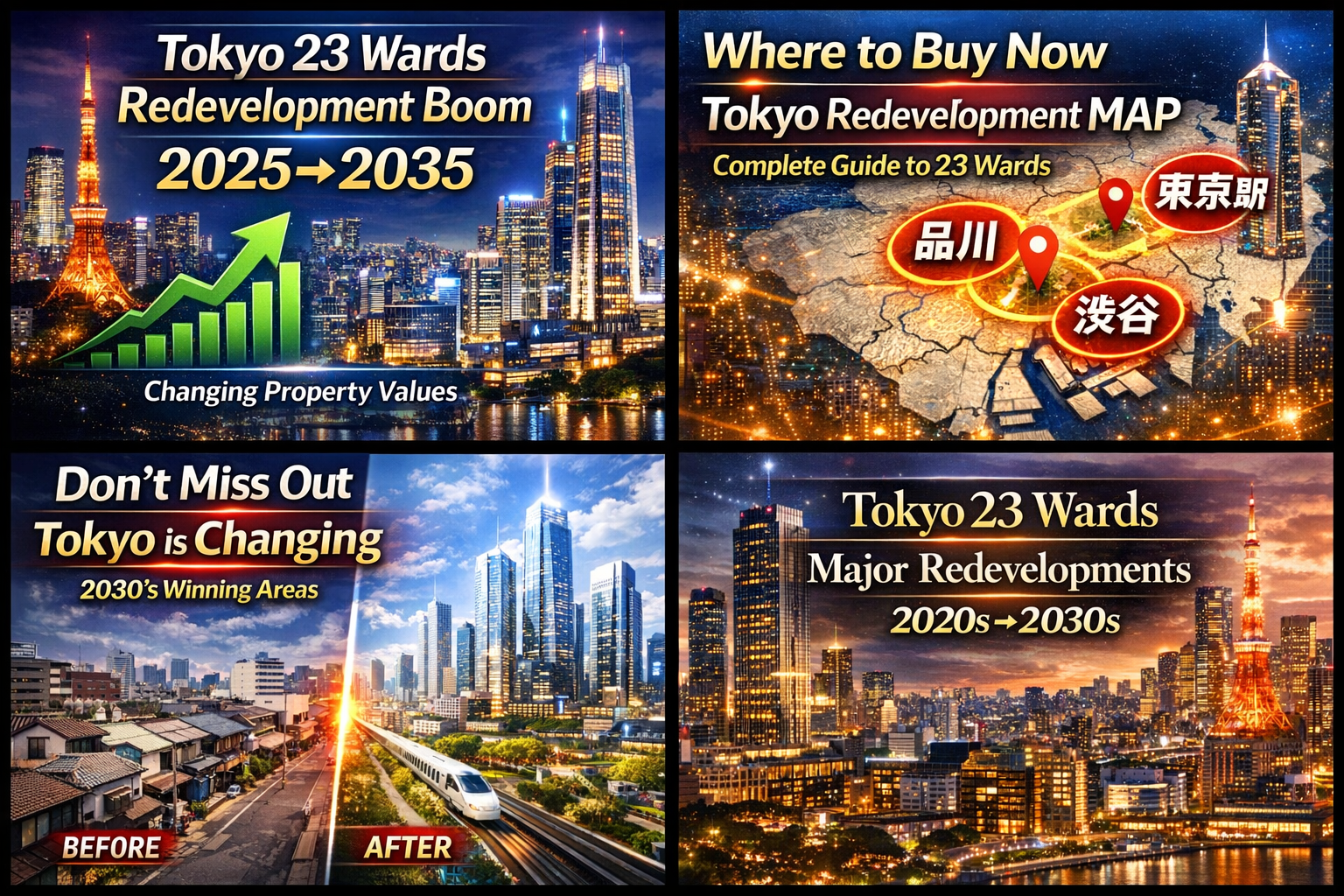
As of 2026, Tokyo is undergoing what is often called a “once-in-a-century” large-scale urban transformation, focusing on strengthening international competitiveness, disaster prevention, and modernizing aging infrastructure.
Major Redevelopment Projects in Tokyo’s 23 Wards (Late 2020s – 2030s)
| Project Name | Location (Address) | Project Overview | Key Companies Involved | Est. Completion |
| TOKYO TORCH | Otemachi 2-chome, Chiyoda-ku / Yaesu 1-chome, Chuo-ku | Development of a new landmark in front of Tokyo Station, featuring the “Torch Tower,” which will be the tallest building in Japan (approx. 385m). | Mitsubishi Estate, JR East | FY2028 (Entire site) |
| TAKANAWA GATEWAY CITY | Konan 2-chome, Takanawa 2-chome, Mita 3-chome, Minato-ku | A massive urban development utilizing the former site of a railway yard. Four blocks will be developed as an international business exchange hub. | JR East | 2025–2026 (Phased) |
| Tsukiji Market Site Redevelopment | Tsukiji 5-chome, Chuo-ku | Construction of a multi-purpose stadium with a capacity of 50,000, MICE facilities, and hotels on the former site of the Tsukiji Market. | Mitsui Fudosan, Toyota Fudosan, Yomiuri Shimbun, Mitsubishi Estate, etc. | Early 2030s |
| Shinjuku Station West Exit District | Shinjuku West Exit (Former Odakyu Dept. Store site) | Construction of a 48-story skyscraper on the former Odakyu Department Store site. Development includes a “Sky Corridor” to improve pedestrian flow. | Odakyu Electric Railway, Tokyo Metro, Tokyu Land | FY2029 |
| TOKYO CROSS PARK (Uchisaiwaicho 1-Chome) | Uchisaiwaicho 1-chome, Chiyoda-ku | One of the largest redevelopments in the city center adjacent to Hibiya Park. Includes three towers and the rebuilding of the Imperial Hotel Main Building. | Mitsui Fudosan, NTT, Imperial Hotel, TEPCO, etc. | Mid-2030s |
| Nihonbashi 1-Chome Central District | Nihonbashi 1-chome, Chuo-ku | Waterfront redevelopment along the Nihonbashi River. Will feature a riverfront terrace and the luxury hotel “Waldorf Astoria.” | Mitsui Fudosan, Nomura Real Estate, Chugai Pharmaceutical | FY2026 |
| BLUE FRONT SHIBAURA | Shibaura 1-chome, Minato-ku | Rebuilding of the Hamamatsucho Building into twin towers to create a vibrant waterfront space along the canal. | Nomura Real Estate, JR East | FY2030 |
| Shibuya Station Central Area (Sakura Stage, etc.) | Sakuragaoka-cho, Dogenzaka, etc., Shibuya-ku | Successive redevelopment around Shibuya Station. Aims to concentrate IT and creative industries while improving pedestrian networks. | Tokyu Land, Tokyu Corp. | Ongoing (through approx. 2030) |
| Akasaka 2-Chome (Akasaka Trust Tower) | Akasaka 2-chome, Minato-ku | Development near the former Patent Office site. Includes world-class lodging and a hub for promoting history and culture. | Mori Trust, NTT Urban Development | 2025 (Partial) |
| Oimachi Station Hiro-machi District | Hiromachi 2-chome, Shinagawa-ku | Utilizing former JR East employee housing land. Includes a multi-purpose complex and a cinema complex adjacent to the Shinagawa City Hall park. | JR East | FY2025 |
Area Overview
1. Tokyo, Nihonbashi, and Otemachi Area
As Japan’s financial and business heart, this area aims to be the “easiest city in the world to do business.” TOKYO TORCH will be a new national symbol due to its overwhelming height. In the Nihonbashi area, projects are moving forward to move the Shuto Expressway underground to revitalize the historic riverfront.
2. Minato (Toranomon, Azabudai, and Takanawa) Area
This area is accelerating the formation of an “International Business and Exchange Hub” targeting foreign companies and residents. Following the opening of Azabudai Hills (2023), the Takanawa Gateway City project is building a smart city on vast former railway land.
3. Shinjuku and Shibuya Area
The primary focus here is the restructuring of major railway terminals. In Shinjuku, the “Shinjuku Grand Terminal” vision is underway to fix the lack of east-west connectivity. In Shibuya, the complex multi-layered redevelopment of the station surroundings is entering its final stages.
4. Waterfront Area (Tsukiji, Shibaura, and Harumi)
Following the move-in of residents to Harumi Flag (the former Olympic Village), the population in this area is surging. Projects like the stadium at the Tsukiji Market site and the waterfront development in Shibaura are significantly increasing the value of Tokyo’s coastal zones.
Key Players (Leading Companies)
- Mitsui Fudosan, Mitsubishi Estate, Nomura Real Estate: These major developers lead most of the large-scale commercial and mixed-use projects in the 23 wards.
- JR East, Tokyu, Odakyu: These railway companies lead redevelopments centered on infrastructure, station buildings, and their surrounding neighborhoods.
- Mori Building: Specializes in “Urban Area Redevelopment” (integrated neighborhood development), such as the Toranomon-Azabudai area.


コメント