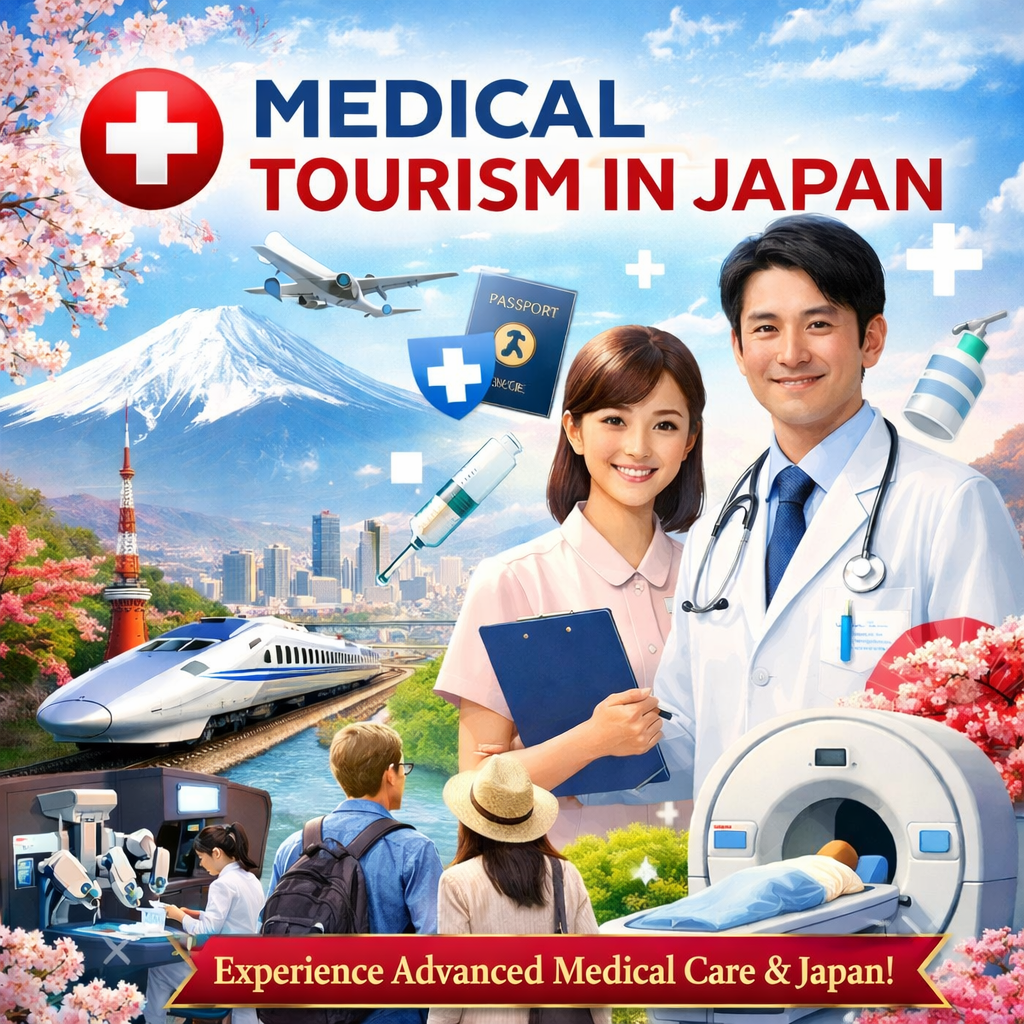
Japan’s Medical Tourism (Medical Inbound / Medical Tourism): Full-Scale Expansion Underway from 2025
Japan’s medical tourism sector is entering a phase of serious, government-led expansion from 2025 onward, characterized by the fusion of high-quality medical treatment with travel experiences. In the opening assessment for 2026, Japan’s medical quality, attentiveness, and reliability are recognized as having genuine demand in the international market, prompting a unified, whole-of-government push forward.
1. Key Offerings in Japan’s Medical Tourism
- Health Checkups & Comprehensive Screenings: The most popular category. Japan’s highly accurate imaging diagnostics and early-detection capabilities are widely valued.
- Advanced Medical Treatment: Cutting-edge care — including cancer treatment, cardiac surgery, and orthopedic procedures — that patients cannot access in their home countries.
- Regenerative Medicine, Aesthetics & Wellness: Japan’s distinctive cosmetic treatments and frontier stem cell therapies.
- Tourism Integration: Package programs that combine treatment with visits to Japan’s iconic destinations during recovery periods.
2. Current Status & Outlook (2025–2026)
- Market Growth: Japan’s medical tourism market is projected to grow from approximately $1.24 billion in 2025 to around $1.58 billion in 2026, and to reach approximately $11.62 billion by 2034 — reflecting an exceptionally high compound annual growth rate (CAGR) of 28.3%.
- Target Demographics: Currently centered on affluent travelers from China and Southeast Asia, with global expansion anticipated going forward.
- Driving Factors: A favorable tailwind from the weak yen, improving financial conditions for healthcare providers, and intensifying competition in Asian medical tourism from Thailand, Singapore, South Korea, and others.
3. Japan’s Unique Strengths & Challenges
- Strengths: World-class medical quality (particularly in oncology and vascular surgery), meticulous patient care, and patient satisfaction rates exceeding 90%.
- Challenges: Language barriers (medical interpretation), unpaid medical bill risks, capacity competition with domestic patients, and limited insurance coverage options specific to foreign patients.
4. Key Receiving Infrastructure
- JIH (Japan International Hospitality): Certified hospitals — designated JIH Hospitals — operating under the “Guidelines for Certification of Medical Travel Support Companies” endorsed by the Ministry of Health, Labour and Welfare and the Ministry of Economy, Trade and Industry serve as the primary receiving institutions.
- Coordinator Operators: Private-sector coordinators handling medical interpretation and travel logistics play an absolutely critical role in the ecosystem.
In Conclusion
Japan’s medical tourism is poised for continued and accelerating growth — evolving beyond simple treatment into a high-value travel lifestyle centered on health and longevity, powered by the core proposition of safety, security, and superior quality.
日本のメディカルツーリズム(医療インバウンド):2025年から本格拡大へ
日本の医療観光が、政府主導のもと2025年以降いよいよ本格的な成長フェーズに入っています。高水準の医療と旅行体験を融合させたこの分野は、国際市場での需要が確かなものとして認識され、官民一体での推進が加速しています。
主な医療サービス 人間ドック・精密検診(画像診断の高精度が特に評価)、がん治療・心臓外科・整形外科などの高度医療、再生医療・美容・ウェルネス、そして療養中の観光を組み合わせたパッケージプログラムが柱となっています。
市場規模と成長予測 2025年の約12.4億ドルから2026年には約15.8億ドルへ拡大し、2034年には約116億ドルに達すると予測されています(年間成長率28.3%)。現在は中国・東南アジアの富裕層が主な対象ですが、今後はグローバルに拡大が見込まれます。円安追い風・医療機関の収益改善・タイ・シンガポール・韓国との競争激化が主な成長要因です。
日本の強みと課題 腫瘍科・血管外科を中心とした世界トップクラスの医療品質と患者満足度90%超が強み。一方で、言語barrier(医療通訳)、未払いリスク、国内患者との受入競合、外国人向け保険の整備不足が課題です。
受入インフラ 厚労省・経産省認定の「JIH認定病院」が中核機関として機能し、医療通訳・旅行手配を担う民間コーディネーターが不可欠な役割を果たしています。
総括 日本のメディカルツーリズムは、単なる治療渡航を超え、「安全・安心・高品質」を核とした健康・長寿志向の高付加価値トラベルライフスタイルへと進化しながら、さらなる加速が期待されます。


コメント